ADVERTORIAL

Top Heart Doctor: If Your Cholesterol Went Down But Your Plaque Still Grew, This May Be Why

Medical Review By James Ward, MD


Board-Certified Cardiologist


22 Years Clinical Practice


December 21, 2024• 3 Min Read

December 21, 2025 • 3 Min Read

The scan should have been good news.


His cholesterol had finally come down.


His blood pressure looked better.


He'd lost eighteen pounds.


He'd walked almost three hundred mornings in a row.


By every number we use to check a heart, Tom was doing everything right.


But when his scan came up on my screen… the same kind of scan he'd had two years before… the plaque in his arteries had grown anyway.


The blockage in his worst artery had gone from just under 40% to more than 70%.


In two years, it had almost doubled.


That wasn't supposed to happen.


My name is Dr. Marcus Hale.


For twenty-one years I was a heart doctor… the one who puts tiny tubes called stents into clogged arteries to hold them open.


And for most of those years, I believed clogged arteries came down to one thing: cholesterol.


That scan didn't fit.


And it wasn't the first one.


I'd seen it before.


Two men.


Same age.


Almost the same cholesterol.


Same pills.


Same diet.


One man's arteries barely changed in five years.


The other needed a second stent in eighteen months.


By everything I'd been taught, those two men should have looked the same.


They didn't.


So I stopped brushing it off.


And I did something most doctors never have time to do: I sat down and read the research myself… not the drug-company flyers, the real studies.


It took me the better part of two years.


I read papers going back forty years.


Studies on people who had died, out of Harvard.


Scan studies from Johns Hopkins.


Big reports in the New England Journal of Medicine and The Lancet that never make it into a ten-minute visit.


Honestly, I thought I'd find my own mistake.


I was hoping to.


Instead, study after study pointed somewhere else.


Somewhere that changed everything I thought I knew about why plaque keeps growing.


Tom's scan was the first clue.


What happened to him next is why I'm writing this.


But before I tell you what I found, I need to ask you something.


Have you ever felt like you're doing everything right… but your body keeps giving you the wrong result?


You eat well.


You take what your doctor gave you.


You walk.


You watch your numbers.


You don't cheat.


And every time they scan you, the plaque is worse than last time.


More buildup.


Less room.


Year after year… no matter what you do.


That's how you know something is really wrong.


Not just a feeling.


A number, in black and white, going the wrong way while you do everything right.


And your body feels it too.


You're tired all the time… you wake up tired, even after a full night's sleep.


You feel weak.


Little things wear you out.


You run out of breath easily.


Sometimes you stand up and feel dizzy.


And every now and then your heart skips a beat… and for a second, it scares you.


But here's the part that really keeps you up at night.


It isn't the scan.


It's what the scan is quietly taking from you.


You're too worn out to keep up with the grandkids.


You've started saying no… to friends, to trips, to nights out… because you just don't have it in you anymore.


Little by little, without ever choosing it, you've ended up watching your own life from the sidelines.


And a scary question has started to creep in: is this it? Is this how the rest of my life is going to feel?


You've told your doctor all of this.


Every time it's the same: "It's just your age."


"It's probably stress."


But you've seen the scans.


You know better.


Whatever you're doing… it isn't working.


And it's not your fault.


You were handed the wrong tools for the real problem.


Once I show you what that problem really is, every one of those feelings… and that scan… is finally going to make sense.

                                                             What happened to Tom

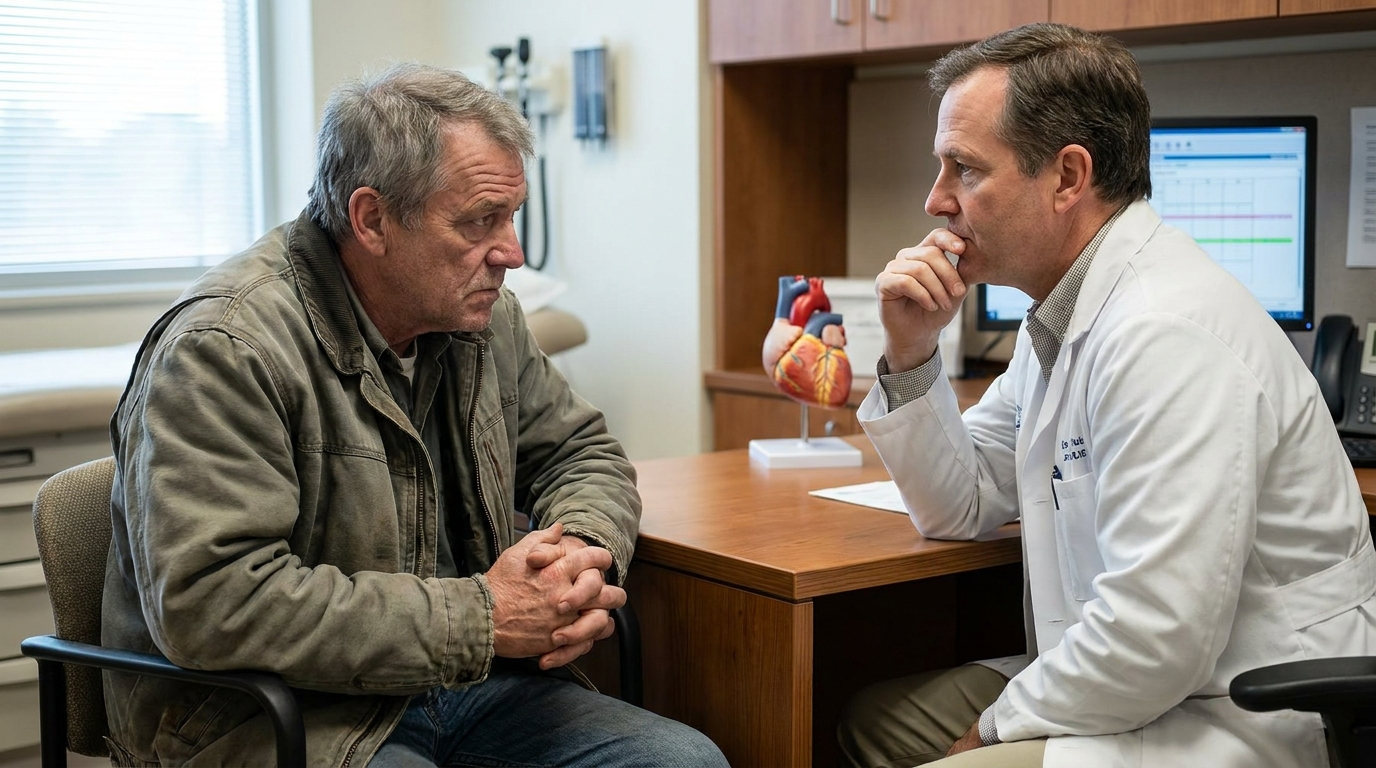
Tom was sixty-two, and he was worn down to nothing.


He told me he couldn't even carry the groceries in from the car without stopping halfway… his chest heavy, his heart pounding so hard he could feel it in his ears.


Most days, he was just too tired to do much of anything.


He'd done everything right for years.


And his last scan was still worse than the one before.


So he looked at me across my desk and asked me the simplest question in the world: "Doc… what can I do?"


And for the first time in twenty-one years, I had nothing for him.


I just sat there, twiddling my thumbs.


Because he'd already done it all.


The diet.


The walks.


Every pill I'd normally reach for, he'd been taking for years… and the plaque grew anyway.


There was nothing left in my bag to give him.


That was the night I stopped trusting everything I'd been taught.


I went back to the drawing board… back into the research… to find out what we'd all gotten wrong.

                                                   What the research really showed


The first thing I had to accept was that plaque is not what most of us picture.


We're taught to picture grease in a pipe… cholesterol slowly caking up like fat in a drain.


That's not what it is.


And to see what it really is, you have to start with how the damage begins.


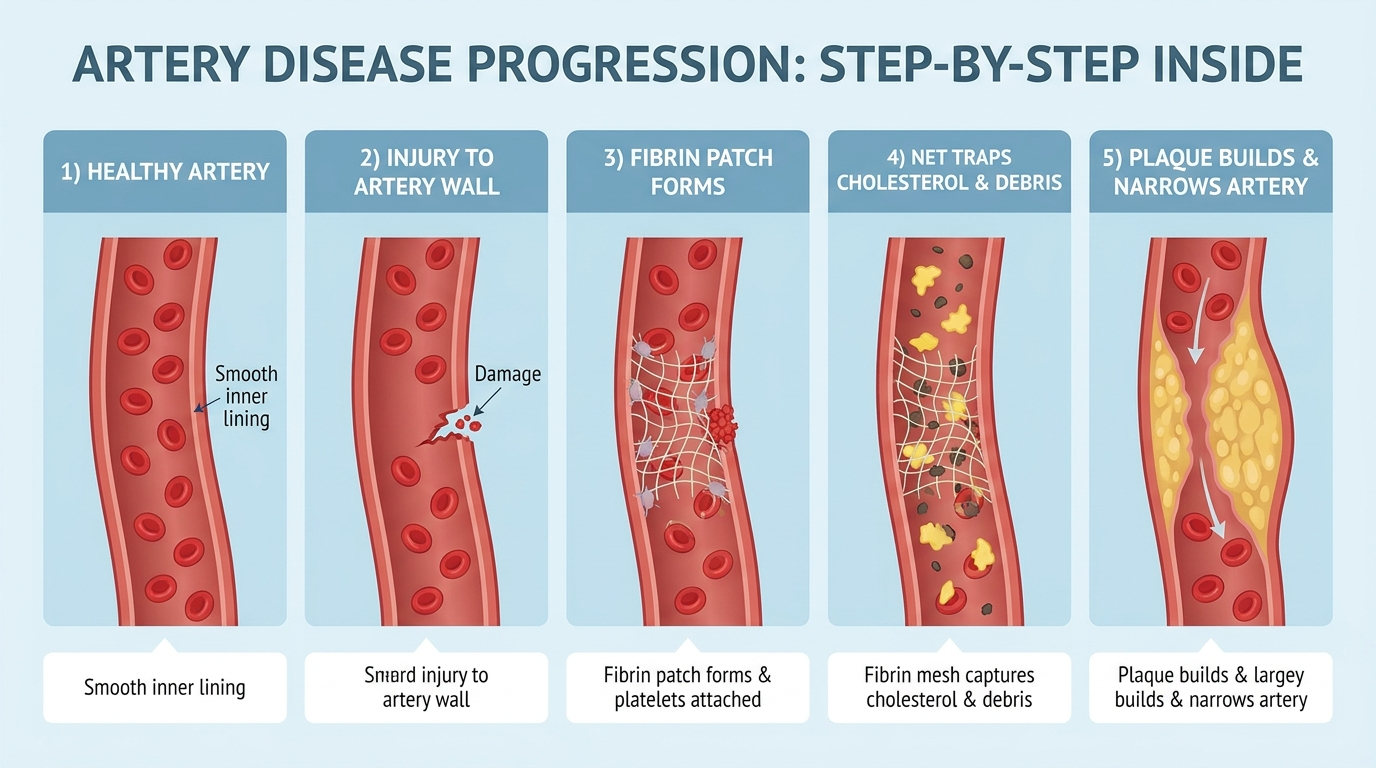
The inside of a healthy artery is smooth and slick.


But it takes a beating.


Every heartbeat, for years, blood is pushed through it hard… a pounding that never stops.


And when your cholesterol runs high… the way yours has, maybe for years before you ever got it down… it makes that beating far worse.


The extra cholesterol packed in your blood doesn't just float past.


It digs into the smooth lining and scrapes it raw, over and over.


The higher it ran, and the longer it ran high, the more tiny cuts it carved into the wall.


None of that is dramatic.


It's just wear and tear.


But it leaves tiny cuts in the artery wall… too small to feel, and happening all the time.


Your body is good at fixing small cuts.


It does the same thing it does when you nick your finger: it sends a sticky stuff called fibrin to patch the spot.


Think of fibrin as the body's repair tape.


It seals the little cut so the wall can heal underneath.


That's normal.


That's healthy.


And here's the key part… once the wall heals, your body is supposed to melt that patch away and clear it off.


Cut, patch, heal, clear.


Over and over, your whole life, and you never feel a thing.


So if everyone gets these tiny cuts, and everyone patches them with fibrin… why do some people clog up, and others don't?


Because in some people, the patch never gets cleared.


Here's why.


Right where the cut is, there are little cells that are supposed to do their job and then quietly die off.


But over the years… worn down by all that damage and by age… some of them stop dying.


They get stuck.


Alive, but broken.


Doctors call them senescent cells.


People get it faster when I call them zombie cells.


And zombie cells do one thing, over and over.


They send out an alarm that never shuts off.


It tells your body the same thing again and again: this spot is still hurt.


Send more tape.


So your body does.


More fibrin. Then more.


The patch never gets the "all clear" to melt away.


Layer piles on layer, over the same spot, until it hardens into a tough net… stuck hard to the artery wall, pushing into the bloodstream.


That net is the plaque.


The cholesterol you've been told to fear just floats by and gets caught in it, like leaves in a screen door.


It makes the pile bigger.


But it's not what holds the thing together.


It's just a passenger. Not the driver.


And this isn't some wild theory.


A few years back, the New England Journal of Medicine ran a study of more than ten thousand heart patients.


It found that cooling down the swelling in the artery wall lowered their risk of a heart attack… even when their cholesterol never moved at all.


Read that again.


Calm the fire in the wall, and people did better, with their cholesterol left untouched.


The whole story I'd built my career on had a hole in it.


But there's a deeper layer here… and it's the part nobody ever explains to you.


Your body does have a way to fight this.


You have cleanup cells… part of your immune system… whose whole job is to find broken, worn-out cells and haul them away before they pile up.


For someone with clean arteries and only light wear, that crew keeps up just fine, even into old age.


There's not much to clear, so it never falls behind.


But that's not your arteries.


Years of high cholesterol left your walls cut up and raw… and every bit of that damage means another stuck cell and another patch of fibrin for the crew to deal with.


It's just too much.


The crew falls behind, then further behind, then gets buried alive under the backlog.


And here's the cruel part: a cleanup cell that's worn out and overworked is exactly the kind that turns into a zombie itself.


So in an artery taking this much damage, two bad things happen at once.


Your cleanup crew stops hauling the zombies away… and it slowly turns into the factory making new ones.


So what's the real root?


Here's the part that changes everything.


It's not the cholesterol… at least, not anymore. The high cholesterol was the match. It lit the fire: it scraped your arteries raw and got the whole thing burning.


But once that fire is going… once the net is built on the wall and your cleanup crew is buried… the fire keeps burning on its own. It doesn't need the match anymore.


And that, finally, is why you did everything right and the plaque still grew.


You got your cholesterol down.


Good… keep it down.


But blowing out the match doesn't put out a fire that's already roaring.


The net is still stuck to the wall.


The crew is still buried.


And that's what keeps climbing on your scans, no matter how good your numbers look.


And I want to be clear… this next part isn't just my idea.


Researchers at the Mayo Clinic ran a study and published it in the journal Science.


When they cleared these worn-out zombie cells out of the arteries, the plaque stopped growing… and started to break down on its own.


The cells were the cause.


Take them away, and the artery began to heal itself.


Now here's the part I really need you to hear.


Everything you've been doing helps.


I mean that.


Your statin lowers the cholesterol in your blood… keep taking it.


Your beet juice opens your arteries for an hour or two.


Your fish oil, your walking… they all help the blood that flows through.


But none of them touch the net stuck to the wall, or the buried cleanup crew underneath it.


They work on what's flowing through the pipe.


Not on what's clogging it.


So to really end this, I had to answer two questions, not one.


First: is there anything that can safely melt away the fibrin net inside a living artery?


And second: is there anything that can dig the buried cleanup crew back out… so it clears the cells underneath and stops making new ones?

                                                       So what could possibly melt it away?

That left me staring at a question that, at first, seemed impossible to answer.


I needed something… anything… that could reach inside a living artery and melt away a net made of fibrin, the body's own repair tape.


And it had to do it gently.


Fibrin is also what stops you from bleeding to death when you get a cut.


So whatever I used couldn't just thin the blood all over and turn a shaving nick into an emergency.


That is a very short list.


The only fibrin-melting drugs in all of medicine are the clot-busters they keep in the emergency room.


Powerful… but a sledgehammer.


Dangerous.


Used once to stop a heart attack as it's happening, and never again.


Nothing you could safely take every morning.


And the everyday stuff?


It helps… I want to be clear about that.


The statin, the beet juice, the fish oil all do something real.


But like I said a minute ago, what they do is work on the blood flowing through the pipe… they open the vessel and ease the flow for an hour or two.


Then it wears off.


That's real relief, but it's only temporary… because opening a pipe was never the same as clearing out what's stuck inside it.


So everything on every shelf was out.


If the answer was out there, it was buried deeper.


So I went looking.


I started with the simplest question of all.


Remember how I told you your body is supposed to melt that fibrin patch away on its own once the wall heals?


I asked: what does it use to do that?


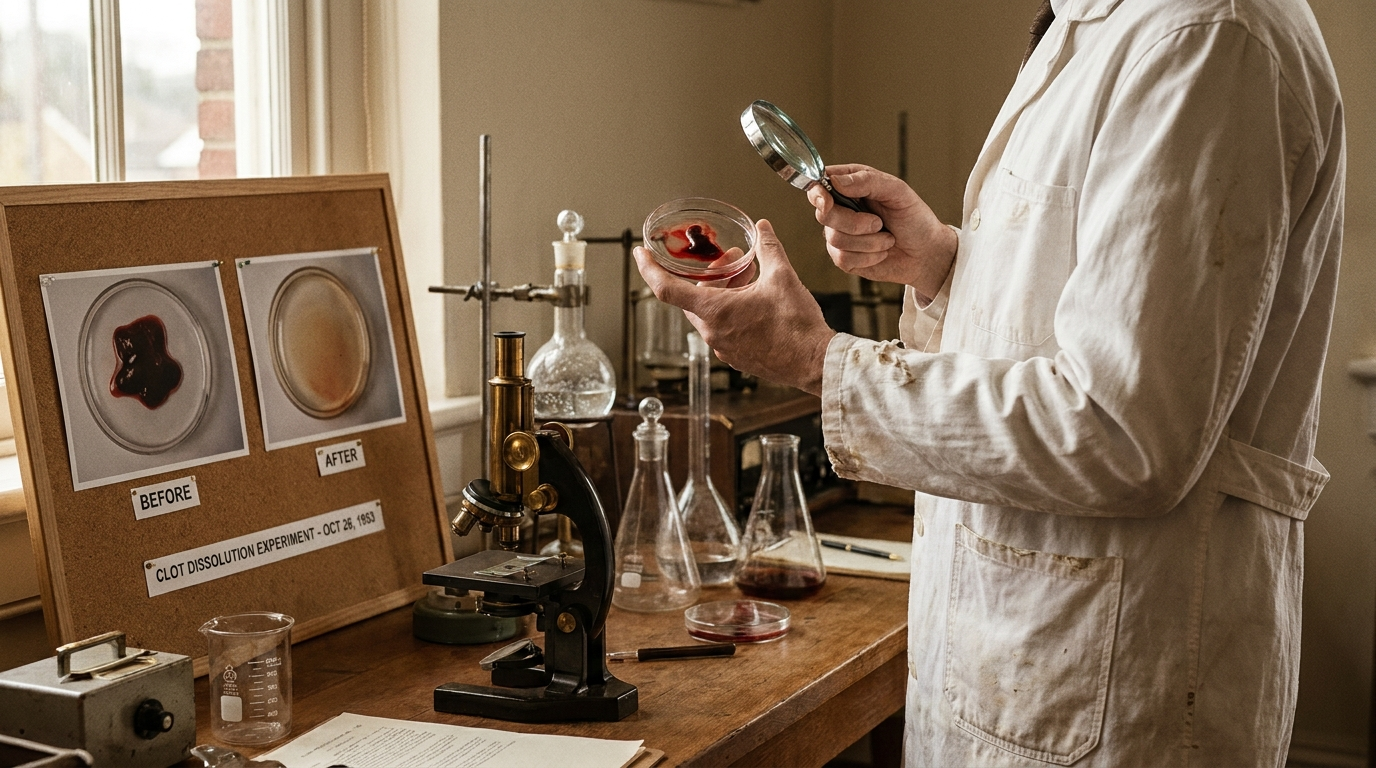
Turns out your blood makes its own fibrin-melting tool.


A built-in cleaner, there to break down old patches and wash them away.


But the research showed me something I'd never been taught: that cleaner fades as you get older.


So right when your battered arteries need it most, you're barely making any… and even that backup cleaner can't keep up with the mess years of high cholesterol left behind.


So the question got sharper: was there a way to give the body that same fibrin-melting tool… from the outside?


That sent me into the research on enzymes.


(An enzyme is just a tiny worker your body uses to break things down… like the ones in your gut that break down food.)


And one thing kept coming up, again and again: the strongest fibrin-melting enzymes found anywhere in nature don't come from a lab. They come from fermenting… the same slow process that turns milk into cheese and cabbage into sauerkraut.


It makes workers strong enough to cut right through fibrin, but gentle enough to eat.


That was my first solid clue.


A fibrin-melting enzyme, made by fermenting, safe enough to eat every day.


But there are hundreds of fermented foods.


Which one?


And that's when a third clue crossed the first two.


Buried in the heart research was a string of Japanese studies no one had ever shown me.


Researchers had spent years following a farming area in northern Japan where heart disease was almost unheard of… where the arteries of seventy-year-olds looked decades younger than they should.


These people didn't have better genes.


They didn't have lower cholesterol.


They shared one odd habit: every single morning, without fail, they ate the same fermented food.


That was the moment it all clicked.


A group of people with the cleanest arteries on earth.


A fermented food they'd eaten every day for a thousand years.


And a fermenting enzyme that melts fibrin… the exact tool my own patients had stopped making.


Three different clues. One answer sitting at the end of all of them.


The food was natto… fermented soybeans.


Sticky, strong-smelling, and on Japanese breakfast tables for over a thousand years.


And the thing inside it doing the work… the fermenting enzyme that melts fibrin… had a name.


There's a good chance you've already heard it.


Over the last few years it's quietly caught on with people who care about living long and keeping their hearts strong: nattokinase.


It does the one thing nothing in my training, nothing in the pharmacy, and nothing on any shelf could do.


It melts the fibrin net directly… gently enough to take every single day… stepping in for the very tool your own body stops making.


Not the cholesterol floating past it.


The net itself.


And it had been tested in real people, not just in theory.


In one study, patients with plaque thickening the big arteries in their necks took nattokinase every day… and over about a year, their plaque shrank by almost a third, while the group who didn't take it kept right on getting worse.


For the first time, I had the first half of my answer.


Then I hit a wall


I had the first half.


For about a week, I really thought I had the whole thing.


Then I hit a wall… and I have to walk you through it, because if you've had a scan, you're about to hit the same wall in your own head.


Everything I'd ever been taught said this kind of damage is permanent.


And the worst of it isn't even soft.


Over the years, your body coats the oldest buildup in calcium until it turns rock-hard… like a little chip of stone set into the artery wall.


That hard, rocky buildup is what a "calcium score" measures.


And every heart doctor in the country… me included, for twenty-one years… tells patients the same thing about that number: it only goes one way. Up.


You can slow it down.


You can never bring it back.


So I looked at what I'd found, and my heart sank.


Even if the nattokinase cleared the soft plaque, the artery would still be full of hard, rocky plaque that nothing on earth was supposed to touch.


Half an answer, at best.


I almost stopped right there.


But something kept nagging at me.


I'd spent my whole career saying "it's permanent"… and I'd never once checked if that was actually true.


So this time I checked.


I pulled the long-term scans that follow the same arteries year after year.


I looked at how the body handles old, hard tissue everywhere else… the way it's always tearing down and rebuilding bone, the way it slowly fades a scar.


And what I found went against almost everything I'd been telling my patients.


Then I found the study that broke the rule flat out.


Researchers had shown the one thing my training swore could never happen: under the right conditions, the hard plaque in patients' arteries didn't just stop growing… it actually shrank.


Not fast.


Not by a lot.


But it moved… the way every heart doctor swears it never can.


So if it can move… if hard plaque can actually be undone… the only question left was how.


And the easiest way to see the answer is to picture wax running down the side of a candle.


The wax that just dripped is still warm and soft.


Wipe it with your thumb and it's gone.


The wax that dripped weeks ago?


Cold and hard.


You can't wipe that off.


You have to scrape it, and it takes real work.


It's all the same wax.


The only difference is how long it's been sitting there.


Your arteries work the exact same way.


And clearing them takes two different tools… one for the soft wax, one for the hard.


The soft plaque is the fresh drip… the new fibrin net, still soft, still growing.


It's the dangerous part.


The part climbing on your scans.


The part that bursts and causes a heart attack.


And that's exactly what nattokinase melts away.


Like wiping warm wax off with your thumb, it works fast.


That's why most people feel the difference in weeks… warmth back in the hands, the stairs easier, the afternoon crash gone.


The soft, dangerous plaque clears first, and it clears quickly.


But nattokinase doesn't touch the old, hard wax.


Nothing you swallow can just melt stone.


The only thing that can wear down hard plaque is your own body… those same cleanup cells.


And you already know what happened to them: in your arteries, they got buried under years of damage and never dug out.


That's why the hard plaque has just sat there for years… not because it's permanent, but because the crew that's supposed to clear it has been too swamped to ever reach it.


So the real question became: could anything dig that crew back out and put it back to work?


And… finally… the research gave me my answer.


Researchers had spent years studying a special fiber pulled from a certain fermented mushroom… scientists call it a beta-glucan.


What they found, and published in the journal Cell, was amazing.


This fiber could wake tired, switched-off cleanup cells and put them back to work.


And a working cleanup crew does two jobs at once: it hauls away the stuck cells that keep rebuilding the soft net… so no new plaque takes hold… and, slowly, it scrapes down the old hard plaque the way you'd scrape cold wax, a little at a time, and carries it off.


But here's the honest part: that scraping is slow.


The soft wax wipes off in weeks.


The old, hard wax… the calcium you spent thirty or forty years building up… comes off over months.


And for the really stubborn, decades-old stuff, it takes a year or two of taking it every single day.


It's not that the old plaque can't be undone.


It's that, after sitting in the wall that long, it just takes time.


The people who finally watch their calcium score tick down aren't the ones who quit at thirty days.


They're the ones who stuck with it long enough to let their body finish the job.


So here's the honest shape of it.


The relief comes early… you'll feel it in weeks.


The turnaround comes with time… you'll see it on a scan a year or two down the road, that number they swore would only ever go up, finally coming down.


That wasn't half an answer.


It was the whole thing… as long as you give it time.

                                               Why you've never heard this 

So why hasn't your own doctor told you any of this?


I asked myself the same thing.


And the answer isn't some big conspiracy.


It's simpler than that… and sadder.


Neither of the two things that actually work is a drug.


One is an enzyme from a fermented bean.


The other is a fiber from a fermented mushroom.


You can't own the rights to a food.


And if you can't own it, no company will spend a billion dollars studying it or sending salespeople to teach doctors about it.


So it just sat there in the research.


For forty years.


Read by a handful of scientists.


Ignored by almost everyone who treats patients.


It's not that your doctor is hiding it.


It's that nobody ever put it in front of him.


He's treating you with the only tools the system bothered to pay for.


That's not evil.


It's just how the money flows.


But you're the one who pays for it.


The mistake almost everyone makes


By now you might be thinking: fine… I'll just go buy these two things myself.


A bottle of nattokinase.


A bag of some mushroom supplement.


Take them both and call it a day.


I get why.


But this is the exact mistake I watched smart people make over and over… and it costs them far more than money.


Because while you're swallowing pills that were never going to work, the net on your wall doesn't pause and wait.


It keeps building.


Your scan keeps climbing.


And the one thing you can never get back… time… drains away, month after wasted month, while the danger creeps toward the day that artery closes for good.


With plaque, lost time isn't an inconvenience.


It's the whole ballgame.


So before you spend a dollar, here's why doing it yourself almost never works.


First… the dose is nowhere near enough.


The amount of nattokinase that actually moved plaque in the research was about 10,800 FU a day.


(FU is just how they measure how much fibrin the enzyme can break down.)


The bottles you'll find on a shelf?


Somewhere between 2,000 and 5,000.


At that strength, the research showed nothing happened… you could take it faithfully for a year and never lay a finger on the net.


It's not a little short.


Even the strongest bottle on the shelf is barely half of what it takes… and most are a fraction of that.


Second… they have to be in the same capsule, not two separate bottles.


You already know you need both working together.


But here's what nobody tells you: taking them as two random pills doesn't get you there.


They have to be balanced in the right amounts, released together, and hitting the artery in sync… every single day.


Two bottles off a shelf… different brands, different doses, different timing… can't do that.


The combination has to be built into one capsule, on purpose.


Loose pills sitting next to each other in your hand isn't the same thing, and your body knows the difference.


Third… most of the enzyme never survives your stomach.


This one's the quiet killer.


Nattokinase is a protein, and your stomach is a pool of acid built to break proteins down.


In a normal capsule, only about 20 to 30% of the enzyme makes it through that acid and into your blood.


The rest is gone before it ever reaches an artery.


To actually work, the capsule has to be engineered… sealed against the acid… so that nearly all of it gets through.


Almost nothing on the shelf is built that way.


So picture what "doing it yourself" really looks like.


Two underdosed bottles.


That can't work in sync.


With two-thirds of the little you did take destroyed before it leaves your stomach.


Money gone… but worse, months gone, while the net keeps thickening and the clock keeps running on an artery that's quietly narrowing toward the day it doesn't open again.


Let me save you the money… and the time you can't afford to lose.


Once I knew exactly what it took… the full 10,800 FU, both ingredients built into one capsule, and a shell that survives the stomach… I went looking for a single product that already did all three.


I spent months at it.


Pharmacy shelves.


Catalogs.


Brand after brand.


Almost every one failed on at least one count.


Most failed on all three.


In the end, only one got every part right.


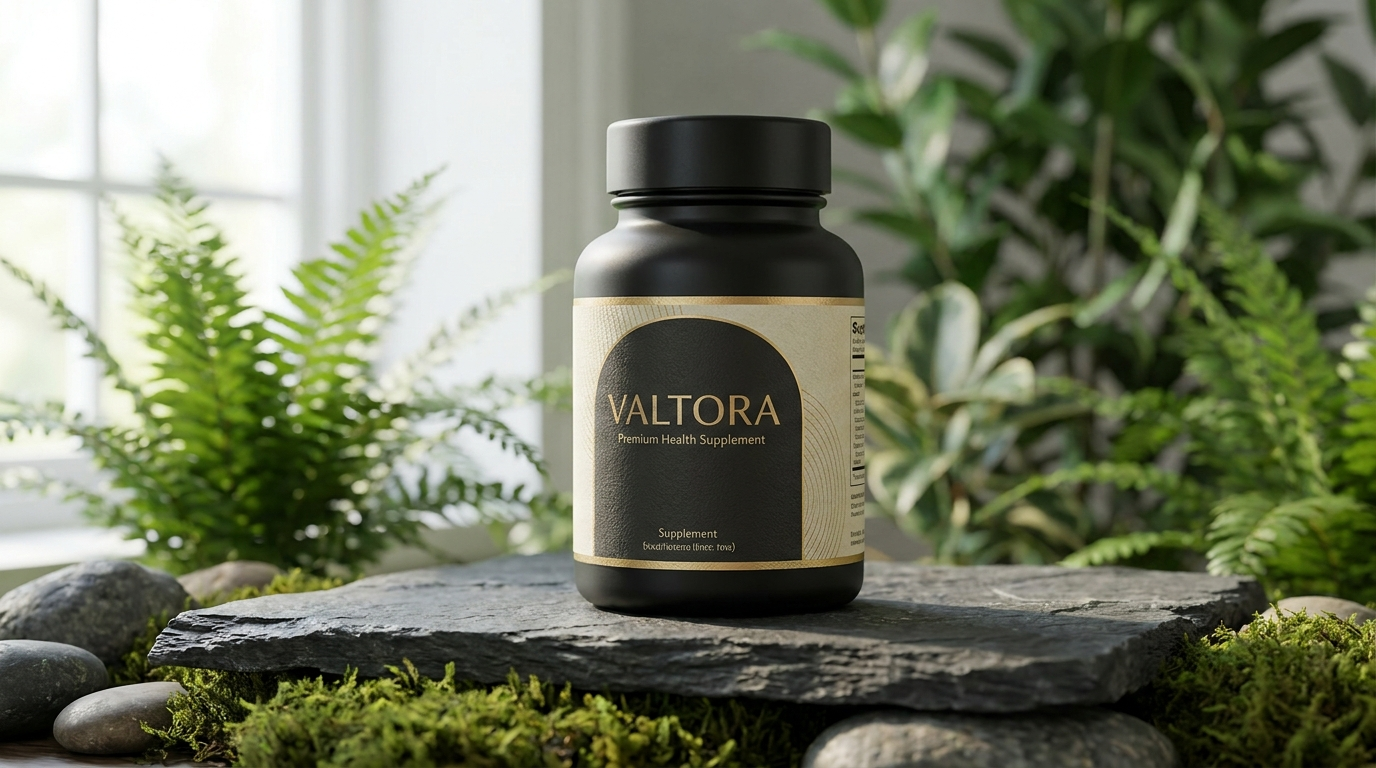
It's called Valtora.

                                            What happened when Tom tried it

I called Tom and told him what I'd found.


I didn't promise him anything.


I told him the truth… that it made sense on paper, and that I wanted him to try it before his next scan.


Two capsules a day.


That was all.


For a few weeks, not much.


Then his texts started to change.


He was sleeping better.


The tiredness was lifting.


He climbed the stairs at his daughter's house and realized, at the top, that he hadn't stopped for breath.


Then he sent me a photo, and I had to sit down for a minute.


It was Tom at a playground.


His granddaughter up on his shoulders.


Both his hands in the air.


The same man who, a few months before, had sat across my desk too tired to carry his own groceries.


Then came the scan.


For the first time in his life, the plaque hadn't grown.


It had shrunk.


The worst artery… the one his doctor wanted to stent… had opened back up on its own.


No stent. No bypass.


And on the scan after that one, it hadn't crept back.


That's the part that meant the most to me… with the root finally fixed, his arteries weren't just clear, they were staying clear.


He didn't say much on the phone.


He just kept saying thank you.


And then, quietly: "I'm not watching from the chair anymore."

                                              It wasn't just Tom

I started giving it, quietly, to other patients I'd run out of answers for.


The ones with good numbers and worse scans.


I figured it would help some of them.


I did not expect what actually happened.


Walter, sixty-eight, was three weeks from a planned stent.


Five months later, his scan was clean enough that his surgeon called it off.


A woman who'd been told her chest tightness was "just anxiety" had her energy back in two months… back to her water aerobics, back to her friends.


One after another.


Not "managed."


Better.


People getting their lives back, and scans moving the right way for the first time in years.


I'm a careful man by training.


I don't get excited easily.


But I'd spent twenty-one years watching this disease move in only one direction.


Watching it move backward, over and over, was the first time in my career I felt like it could actually be beaten.


And it's not just my patients.


The company that makes Valtora shared its own records with me.


Since the start of 2025, 4,109 people have used it.


Of the 1,127 who filled out a follow-up survey:


More than 9 in 10 said they had more energy, steadier footing, or both.


About 8 in 10 said the breathlessness and chest tightness they'd blamed on age had eased up.


61% who got a follow-up scan said their plaque had stopped growing… or shrunk.


And the figure that convinced me most: fewer than half a percent ever asked for their money back.


A survey isn't a real clinical trial, and I won't pretend it is.


But after twenty-one years of watching this disease move only one way, those numbers stopped me cold.


Two of them, in their own words:


"I've got my life back. I'm not stuck in that chair anymore… I chase my grandkids around the yard now. And my worst artery went from over 70% down into the fifties. My heart doctor had no words." — Tom, 62


"My surgeon called off my stent after my next scan. I'm 68 and I sleep through the night again… and I've got the energy to actually enjoy my mornings." — Walter, 68


What makes Valtora different


By now you're probably wondering what actually makes Valtora different.


Here's what I found when I looked at how it's made.


The reason it works is the same reason no one ever sold it to you: it's two fermented foods.


Nobody can own the rights to them.


Nobody can build a fifty-thousand-dollar surgery around them.


So they got ignored.


"Just a supplement" is exactly why it slipped through the cracks… not in spite of being simple, but because of it.


And here's the part nobody else even thought of.


Every supplement you've ever taken came in a dead capsule… an empty shell whose only job was to hold the powder, then melt into nothing.


Wasted.


Valtora doesn't waste it.


Its shell isn't a plain empty shell.


It's made from that same fermented-mushroom fiber… so the capsule itself is the second medicine.


As it goes down, the nattokinase inside melts the soft net, and the shell digs your cleanup crew back out to clear the root and wear down the old hard plaque over time.


One capsule. Two medicines.


One ends what's there fast.


The other makes sure it doesn't come back… and slowly takes back even the plaque you were told was permanent.


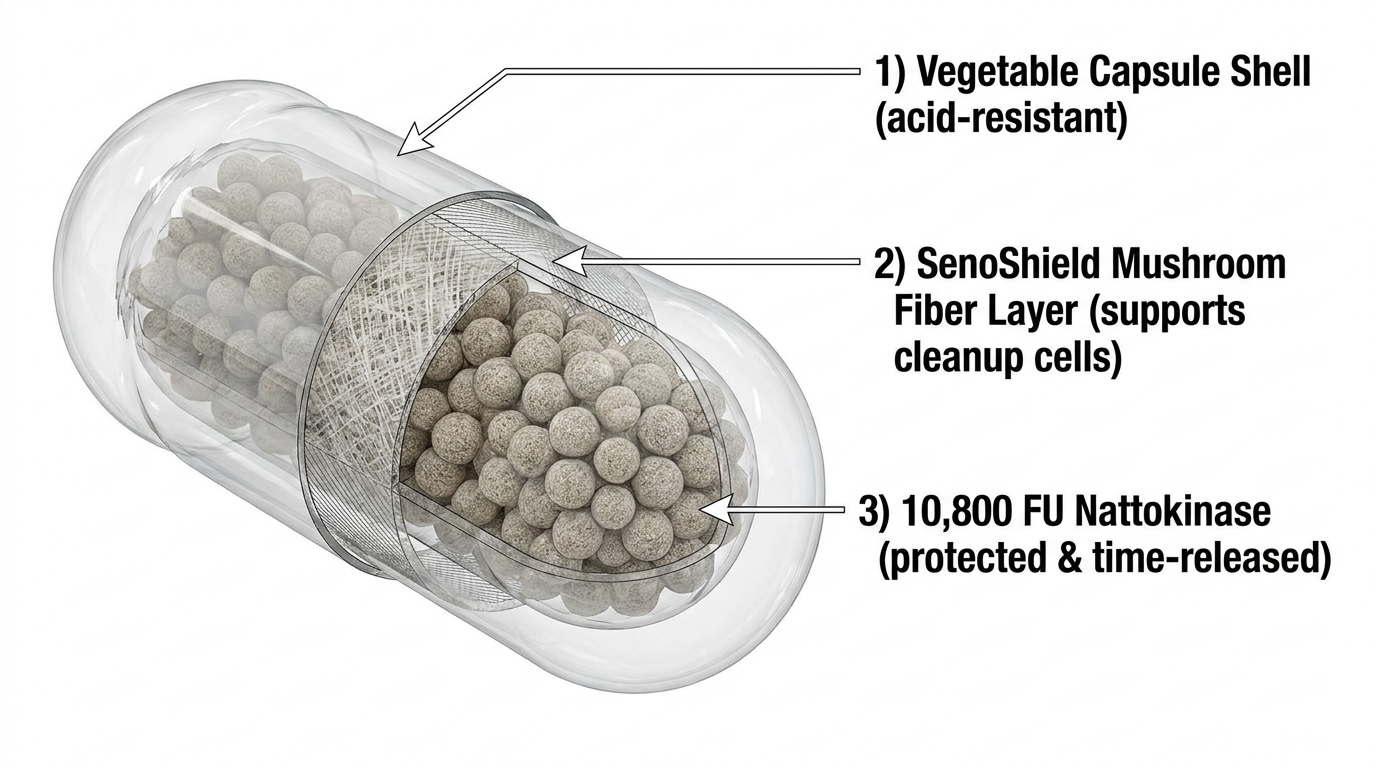
Here's what's inside, and why:


10,800 FU of nattokinase… melts the soft fibrin net.


The dose from the research that actually moved plaque, not the 2,000–5,000 that does nothing.


SenoShield™… the capsule shell itself, made from fermented-mushroom fiber.


It digs your cleanup crew back out to clear the cells that rebuild plaque, and to wear down the old, hard plaque over time.


The "stop it and turn it around" half.


EnzymeShield™… the acid-proof, slow-release shell that carries the enzyme safely past your stomach and feeds it out over a full 48 hours, covering the early-morning hours when you're most at risk.


Two capsules with breakfast.


No needles. No surgery.

                                            What makes Valtora different


By now you're probably wondering what actually makes Valtora different.


Here's what I found when I looked at how it's made.


The reason it works is the same reason no one ever sold it to you: it's two fermented foods.


Nobody can own the rights to them.


Nobody can build a fifty-thousand-dollar surgery around them.


So they got ignored.


"Just a supplement" is exactly why it slipped through the cracks… not in spite of being simple, but because of it.


And here's the part nobody else even thought of.


Every supplement you've ever taken came in a dead capsule… an empty shell whose only job was to hold the powder, then melt into nothing.


Wasted.


Valtora doesn't waste it.


Its shell isn't a plain empty shell.


It's made from that same fermented-mushroom fiber… so the capsule itself is the second medicine.


As it goes down, the nattokinase inside melts the soft net, and the shell digs your cleanup crew back out to clear the root and wear down the old hard plaque over time.


One capsule. Two medicines.


One ends what's there fast.


The other makes sure it doesn't come back… and slowly takes back even the plaque you were told was permanent.


Here's what's inside, and why:


10,800 FU of nattokinase… melts the soft fibrin net.


The dose from the research that actually moved plaque, not the 2,000–5,000 that does nothing.


SenoShield™… the capsule shell itself, made from fermented-mushroom fiber.


It digs your cleanup crew back out to clear the cells that rebuild plaque, and to wear down the old, hard plaque over time.


The "stop it and turn it around" half.


EnzymeShield™… the acid-proof, slow-release shell that carries the enzyme safely past your stomach and feeds it out over a full 48 hours, covering the early-morning hours when you're most at risk.


Two capsules with breakfast.


No needles. No surgery.

What to expect

I'll be straight with you: this is not overnight.


You're undoing years of buildup.


Here's the honest timeline most people describe.


Week 1: Not much at first.


Then, toward the end of the week, the tiredness starts to lift.


You get through the afternoon without crashing.


Weeks 2–3: Breathing comes easier.


The things that used to leave you winded don't.


The dizzy spells when you stand up come less often.


Weeks 4–6: The skipped beats settle down.


Your strength comes back.


You catch yourself doing things you'd been avoiding… without even thinking about it.


Weeks 7–12: You feel steady again.


Awake.


Like yourself.


You start saying yes to things again.


The one-year mark and beyond: This is where the slow half pays off.


The soft plaque cleared early… but the old, hard buildup takes a year or more of taking it every day to wear down.


That's when people start seeing the thing they were told was impossible: a calcium score that finally stops climbing, and starts to drop.

Who this is not for

Let me be honest about who shouldn't buy this.


If one of your arteries is already almost fully blocked, you don't need a capsule… you need a heart doctor this week.


This is not an emergency fix.


If you're looking for permission to keep smoking, skip every walk, and eat whatever you want… this won't save you, and I'd rather you keep your money.


This is for the person who has done the work, watched the scan get worse anyway, and wants their life back… not just a slightly better number on a chart.


If that's you, stay with me.

What the other path costs

Let's be honest about the other option.


Scans and specialists run a few thousand dollars a year.


A stent, thirty to fifty thousand.


A bypass, over a hundred thousand.


And the prescriptions never stop… you refill them for the rest of your life.


After all of it, the most honest doctors will tell you the goal was only ever to "slow it down."


Not stop it.


Not turn it around.


And none of it gives you your energy back.


I spent two decades inside that system.


I'm not attacking the people in it… most are good people, working hard with the tools they were handed.


But those tools were built to manage this disease, not end it.


And managing it, year after year, costs a fortune.


A formula this strong would normally run well over a hundred dollars a month.


Valtora sells for $89 a bottle… already less than a single specialist visit.


But I didn't want price to be the reason anyone stays stuck.


So I went back to the company and asked them to do something for the people reading this… and they agreed.


Right now, for readers of this letter, it's $49.


Almost half off.


And a word on how much to get.


Remember the two clocks: the soft plaque clears in weeks, but wearing down the old, hard plaque takes a year or more of staying with it.


Stop at thirty days and you've only done the easy half.


So three bottles is the least I'd suggest… enough to feel it working.


And if your last scan moved the wrong way, six is what I'd get myself… it's the long game that brings a calcium score down, and it's the lowest price per bottle we offer.


That price won't last.


Here's the straight version: this reader discount runs for the next 24 hours. After that, it goes back to $89.


And there's a hard limit on supply.


Real nattokinase at this dose… paired with a real mushroom-fiber shell… is slow and costly to make, and the fermenting can't be rushed without killing it.


It's made in small batches, and when one sells out, it's gone until the next is ready.


They're working through the current batch now, and at this pace it won't last the week.


So you've got a short window.


If it's in stock and the discount's still live when you're reading this… that's your moment.


⚠️ One more thing… Valtora is only sold here, on this page.


Not on Amazon.


Not in stores.


The cheap, low-dose "nattokinase" you'll find there is the same 2,000-to-5,000 the research showed does nothing… and it's only ever half the formula anyway.


If you see "Valtora" anywhere else, it isn't the real thing.

Try it. Then decide.

I'm not going to ask you to trust me.


I'd rather you test it.


Get a scan or your bloodwork now.


Take Valtora every day for 180 days.


Then get checked again.


If the numbers haven't moved, and you don't feel the difference in your own body, send the bottles back… even the empty ones.


The company gives you every penny back, no questions asked.


I don't ask people to believe in this.


I ask them to measure it.


Two roads


You've got two roads from here.


On the first, nothing changes.


The tiredness wins.


You keep shrinking your life to fit it… fewer trips, fewer visits, more hours in the chair.


You watch your grandkids grow up from the sidelines, because you don't have the energy to get up and join them.


And the buildup keeps growing quietly the whole time, the scans keep getting worse… until, one ordinary day, it takes more than just your energy.


On the second, you finally fix the real cause… you clear out what's there, you stop your body from making more, and you get your life back.


Picture it.


A few weeks from now, you wake up and you're not tired.


You get through the day with something left in the tank.


You climb the stairs and don't even think about it.


You say yes to the trip, the dinner, the afternoon with the grandkids.


Your heart beats quiet and steady, and you stop noticing it at all.


And a year down the road, you sit in that scan room and watch a number move the right way for the first time in your life.


That's not a dream.


It's what happens when you stop managing the blood flowing through, and start clearing out what's stuck on the wall… and fixing what kept building it.


If Valtora's in stock, here's what to do: tap the button below, pick your supply, and start the morning it shows up.


Give it ninety days for the feeling… and a year for the proof.

Buy 3 + Get 2 Free

Most customers don't choose one bottle.

They choose the Buy 3 Get 2 FREE protocol because 30 days usually isn't enough to properly support years of buildup.

Check Availability & Claim Your Discount 

Money Back Guarantee

Every bottle of Valtora comes with a full 90-day money-back guarantee. But this isn't the kind of guarantee where you guess whether it's working. Your bloodwork will tell you.

I tell patients the same thing. Get tested before you start.

Take Valtora for 90 days. Get tested again.

Then make your decision. If your numbers haven't moved in a direction that makes you want to continue... Send it back.

Full refund. No questions. Because I don't ask people to believe in Valtora. I ask them to test it.

Check Availability & Claim Your Discount Today!

What People Like You Are Saying

Doris L. Verified Buyer

I ordered Valtora for my father after reading about the fibrin gap. He's been diabetic for fifteen years and the decline over the last three years was terrifying. He's been on it for two months now and the difference is real. He's walking to the mailbox again, his color is better, and he called me last week just to talk — not to complain about how he feels. That hasn't happened in years.

Title
Title

Michael V. Verified Buyer

My brother is 58, diabetic, controlled A1C, took everything his doctor told him to. Massive heart attack in April. That scared me enough to start looking for what his medications missed. Found Valtora. I've been taking it for six weeks now and the afternoon crashes I used to blame on age are completely gone.

Title
Title

Micah B.  Verified Buyer

I've been Type 2 for twelve years and stuck between 7.0 and 7.4 no matter what I did. Started Valtora three months ago and my last bloodwork came back at 6.4. My fasting glucose is more stable than it's been in years — no more random spikes in the afternoon. On top of that my energy is back, my legs don't feel heavy anymore, and I'm not crashing at 2 PM.

Title
Title

Freya W.  Verified Buyer

I've seen what diabetes does to arteries from the inside. When I read about the fibrin mechanism and the 10,800 FU dose I understood immediately why my own statin wasn't enough. Been taking Valtora for four months alongside everything else. My circulation has noticeably improved and my last labs surprised even my doctor. 

Title

Check Availability & Claim Discount

These statements have not been evaluated by the Food and Drug Administration. This product is not intended to diagnose, treat, cure, or prevent any disease. Results may vary from person to person. The information provided on this site is for informational purposes only and is not intended as a substitute for advice from your physician or other health care professional.


Individual results may vary, testimonials are not claimed to represent typical results. Results shown may not reflect the typical users experience, and are not intended to represent or guarantee that anyone will achieve the same or similar results.

Copyright © 2024 All Rights Reserved.

Terms & Conditions | Privacy policy | Disclaimer